Architecture Always Communicates Who Belongs
I’m not apologizing for having a habit of envisioning the rest of my day before I've finished the first nine.
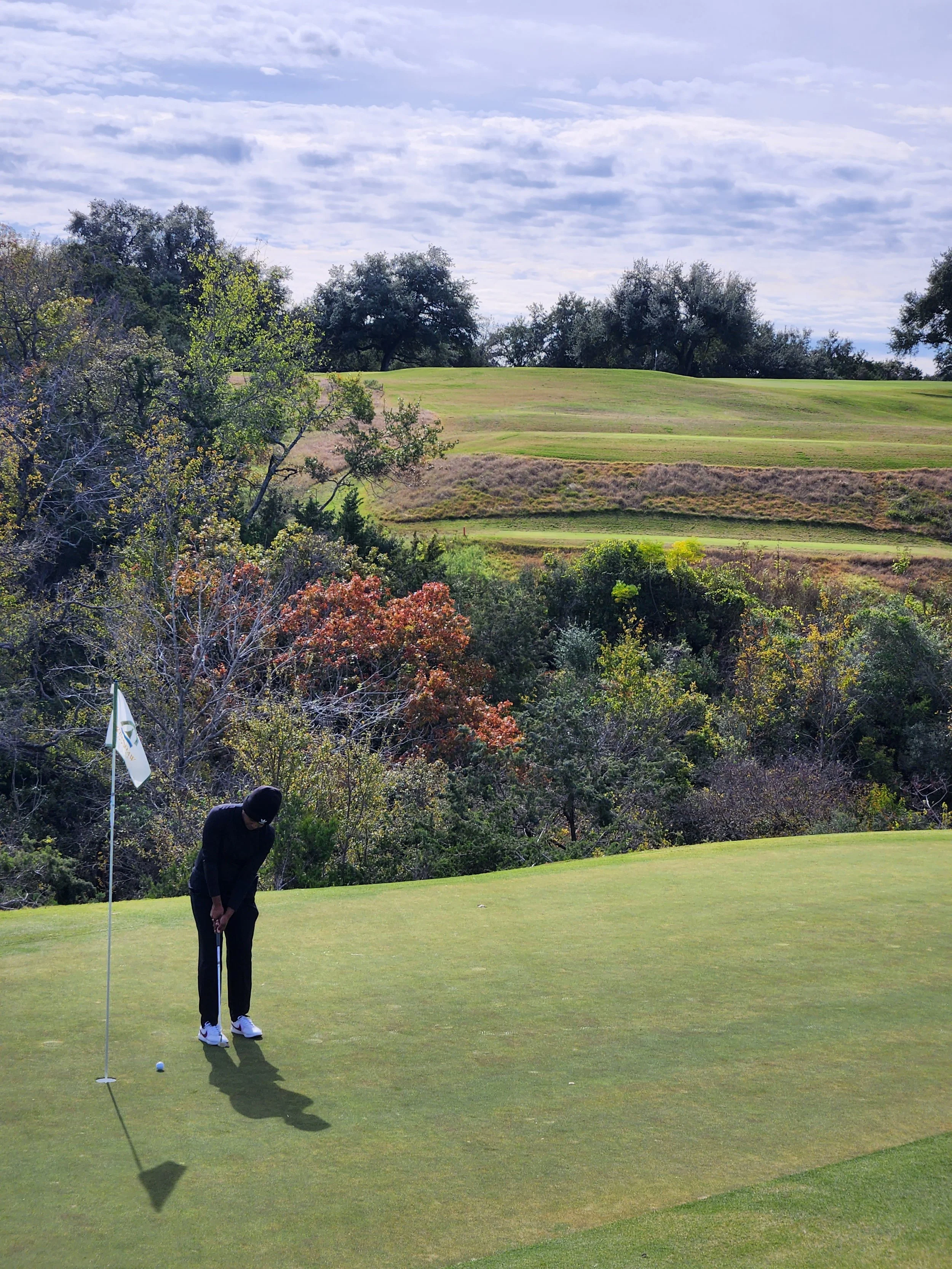
There might be another nine waiting for me, a few putts I'd like to have back, and a scorecard that has already begun making accusations. Still, my mind wanders. I'm thinking about lunch. The light coming through the clubhouse windows. A cold drink, something salty, the particular satisfaction of slipping out of my golf shoes and into something that makes me feel like myself again. Slides. Definitely slides.
I love everything a good day of golf makes possible, including the architecture that makes those possibilities available.

Recovery Is Cultural
There is a version of wellness that has become so expensive.
It lives behind minimalist branding and clean typography. It smells of eucalyptus and asks you to download another app, buy another supplement, book another retreat, optimize another morning routine. Every few months it reinvents itself with a new language, promising that this time, finally, your nervous system will exhale.
It is an industry built on the assumption that recovery is something you purchase. I've fallen prey to it, and in some ways never fully bought into it.

The Rooms That Raised Us
I grew up around women who were almost always taking care of someone else. They worked long hours. They raised children. They carried churches, neighborhoods, marriages, and entire families in ways that history has become remarkably comfortable overlooking. Looking back now, I realize that very little about their lives suggested they should have had time to recover.
From the outside, they didn’t sit down long enough. But they did.

We Were Always Athletes
Sometimes I get asked when I became an athlete. It is an innocent question, usually asked while I'm standing on a golf course, carrying a travel bag through an airport, or talking about PARLO. People assume there must have been a first swing, a first competition, a first jersey as if athleticism arrives the day someone hands you a uniform.
I never know how to answer because the truth is, I don't remember becoming an athlete, but I do remember becoming visible as one.

Up Close and Personal at Sheridan Heights Golf & Country Club
For generations, the golf establishment has sold us a very specific, sanitized image of the athlete: the clean, the polished, the "untouched” presence of men. And here was one of the greatest to ever do it, carrying a different visual language on her skin. No press release, no announcement, no disruption. Just presence. As a tatted athlete myself, I felt that. It’s a quiet rebellion. The culture shifts by existing so fully that the old standards begin to look flimsy by comparison.

The Invisible Clubhouse
Black sapphic love was not a new experience for many women, but it was one that was mostly kept private. To be Black, a woman, attracted to women, and an athlete put too many targets on one’s back. Living freely meant escaping into quiet moments wrapped up in your woman’s arms after receiving scrutiny on the golf course. The Invisible Clubhouse was the post-round kiss on the cheek that passed as a “good job, friend”, but meant something so much more between the two of you. Deep love and connection were subtle because it had to be for survival. But we knew. We always know.

What We Carried Home
The sports world is obsessed with the language of endurance. It can map your output to the decimal point, track your progress over a decade, and detail exactly how hard you pushed your body to the limit. Yet, it has never found a word for what happened after—the deliberate, sacred, and often exhausting work of putting ourselves back together so we could stand upright for another day.